The Gratitude Walk: A Meditative Practice for Mindful Appreciation
🌟 Discover the transformative power of the Gratitude Walk: a mindful practice that enhances mental well-being by fostering gratitude, reducing stress, and…
Read article
Gratitude practices are a scientifically backed cornerstone of holistic mental health, transforming everyday moments into powerful anchors of positivity and resilience. By intentionally shifting focus from what’s lacking to what’s abundant, these simple yet profound exercises reduce stress, elevate mood, and strengthen emotional balance. Whether it’s keeping a daily journal, savoring small joys, or expressing appreciation to others, cultivating gratitude rewires the brain for greater contentment and deeper self-care. Start your journey toward a lighter, more optimistic mindset with easy, actionable techniques that fit seamlessly into your routine—because a grateful heart is the ultimate mental wellness tool.

🌟 Discover the transformative power of the Gratitude Walk: a mindful practice that enhances mental well-being by fostering gratitude, reducing stress, and…
Read article
🌟 Discover quick gratitude exercises that boost mood in just five minutes. These simple practices can instantly elevate your mental well-being, offering…
Read article
🌟 Practicing selfgratitude boosts wellbeing by fostering self-love and resilience. This essential habit helps you appreciate your worth, reduce stress, and cultivate…
Read article
🌟 Discover how cultivating gratitude through simple daily practices can transform your outlook, as gratitude practices improve mental health by fostering joy,…
Read article
🌿 Discover how minimalist living enhances mental well-being through gratitude journaling for mental health. This guide reveals simple practices to cultivate appreciation,…
Read article
🌿 Embracing gratitude for physical health fosters a deeper appreciation for your body's abilities, enhancing overall well-being. This mindset encourages positive mental…
Read article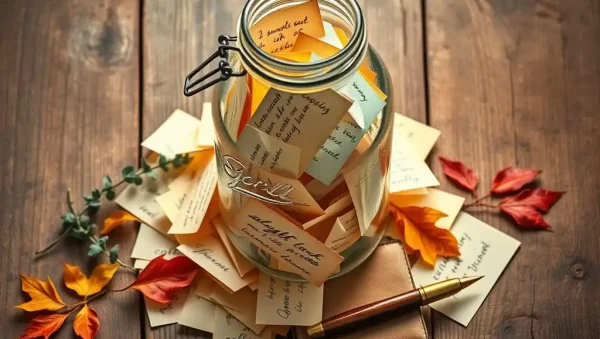
🌟 Discover simple yet powerful gratitude jar ideas for happiness that transform everyday moments into lasting joy. This fun, creative practice enhances…
Read article
🌟 Discover innovative ways to incorporate gratitude into daily life. Explore how gratitude journaling techniques boost happiness and foster mental well-being, transforming…
Read article
🌟 Discover how genuine gratitude, not forced thanks, fosters authentic well-being. This guide explores the difference between true appreciation and toxic positivity,…
Read article
🌟 Discover how practicing workplace gratitude enhances overall well-being by boosting productivity and happiness. Embracing gratitude at work fosters a positive environment,…
Read article
✨ Discover how gratitude journaling improves mental health by fostering positivity, reducing stress, and cultivating resilience. This simple daily practice can transform…
Read article
🌟 Discover how gratitude reduces cynicism feelings, transforming negative outlooks into positivity. This powerful practice opens your heart, fosters emotional resilience, and…
Read articleWelcome to our dedicated subcategory on Gratitude Practices – Cultivating Positivity, part of the Holistic Mental Health & Self-Care category. Here, we explore the transformative power of gratitude as a daily mental wellness tool. Backed by positive psychology research, gratitude is more than just saying "thank you"; it rewires your brain to notice abundance, reduce stress, and enhance emotional resilience. Whether you are new to mindfulness or seeking deeper self-care routines, these practices will help you shift your mindset, improve relationships, and foster a lasting sense of contentment. Discover simple, evidence-based techniques that seamlessly integrate into your everyday life, promoting better mental health without requiring extra time or money. Let’s begin your journey toward a brighter, more grateful outlook and unlock the science-backed benefits of appreciation.
Journaling is the cornerstone of gratitude practices, and this section teaches you how to start and sustain a habit that sticks. We guide you through the “three good things” method, where you write down three positive moments each evening, focusing on why they happened. This simple act trains your brain to scan for positives instead of negatives, building a neural pathway toward optimism. You’ll also learn prompts for days when you feel stuck, such as “What small comfort did I overlook today?” or “Who made my life easier without asking?”.
Expect practical templates, printable worksheets, and tips for overcoming journaling blocks. We emphasize consistency over intensity—even five minutes nightly yields measurable mood improvements. Research from UC Berkeley shows that grateful journaling increases happiness by 25% and improves sleep quality. By pairing your entries with mindful breathing, you create a calming bedtime ritual that reduces anxiety. Start with our guided 7-day challenge, and you’ll soon notice a shift in your default mindset, making gratitude feel effortless rather than forced.
Meditation amplifies gratitude by connecting your mind and body in the present moment. Here, we introduce loving-kindness meditations that begin with appreciating yourself, then extend to others, and finally to challenging people. This sequence dissolves resentment and fosters forgiveness. You’ll also discover a simple 4-7-8 breathing technique paired with a gratitude mantra: inhale “I receive,” hold “I am worthy,” exhale “I give thanks.” Doing this for two minutes daily can lower cortisol levels and increase heart rate variability, a marker of stress resilience.
Our audio-guided sessions range from 3 to 15 minutes, suitable for any schedule. We explain how to create a dedicated gratitude corner with a cushion, candle, or plant, enhancing sensory engagement. For advanced practitioners, we explore walking gratitude meditations that combine movement with appreciation of nature. These practices are especially helpful for those who struggle with racing thoughts, as they anchor attention on positive emotions. Expect downloadable scripts and breathwork charts to keep your practice vibrant and effective, ensuring every session leaves you feeling lighter and more connected.
Gratitude is relational—it deepens bonds when shared. This section focuses on verbal and written expressions that strengthen intimacy, friendship, and family ties. We cover the gratitude visit, where you write a detailed letter to someone who influenced your life positively and read it aloud to them. Studies show this single act boosts your happiness for a month and enhances the recipient’s well-being for weeks. Additionally, we teach “daily appreciations” during family dinners or partner check-ins, using phrases like “I noticed you did X, and it made me feel Y.”
Expect role-play scenarios, conversation starters, and scripts for difficult relationships where gratitude feels awkward. We also discuss the science of “active constructive responding”—how to celebrate others’ good news enthusiastically, which predicts lower divorce rates and stronger teams. For remote relationships, we offer ideas like voice notes, digital gratitude jars, or shared playlists where each song represents a memory you’re thankful for. By integrating these small rituals, you’ll notice reduced conflict, increased cooperation, and a warmer home atmosphere. This practice also protects against loneliness, a major risk factor for depression, making it essential for holistic self-care.
Nature is an untapped reservoir of gratitude, and this section harnesses its healing power. We guide you through forest bathing (Shinrin-yoku), where you mindfully walk and absorb the sights, sounds, and scents around you, ending with a gratitude statement for each element noticed—soil, leaves, wind, or wildlife. This practice lowers blood pressure and boosts immune function, while enhancing your sense of awe, which correlates with higher life satisfaction. We also introduce “sunrise gratitude” where you wake early to watch dawn, noting three things you’re grateful for as light appears.
Expect seasonal activity lists—like collecting autumn leaves to create a gratitude collage or planting a gratitude garden where each flower represents a positive memory. For urban dwellers, we offer plant-based grounding techniques using houseplants or balcony herbs. We emphasize sensory journaling: write down a texture (smooth stone), a scent (rain-soaked soil), and a sound (birdsong) you’re thankful for. These exercises combat “nature deficit disorder,” reducing rumination and increasing present-moment awareness. By making outdoor appreciation a weekly habit, you’ll feel more vitalized, optimistic, and connected to the planet, which powerfully complements clinical self-care.
Technology can enhance your practice when used intentionally. Here, we review top-rated gratitude apps like Grateful, Presently, and Daylio, comparing their features—reminders, mood tracking, photo prompts, and community support—to help you choose one that fits your lifestyle. We also explain the classic gratitude jar method: each day, write one blessing on a slip of paper and add it to a jar; on tough days, read a few entries to rediscover hope. This tangible ritual works especially well for families, classrooms, or as a solo year-long timeline of positivity.
Expect tutorials on creating digital jars (using Google Keep or Notion) and syncing them with calendar alerts. We include tips to avoid comparison traps—the app should inspire, not pressure. Additionally, we cover voice-to-text reflections for those who dislike writing, and photo gratitude where you snap one image daily of something beautiful. Research shows that this visual curation boosts memory recall of positive events. We also address digital detox: schedule app-free gratitude moments to prevent screen fatigue. By blending offline and online tools, you maintain a flexible, adaptive practice that sticks despite a busy schedule, reinforcing that gratitude is a skill you can flex anytime, anywhere.
Most people report improved mood within two weeks of daily practice, but lasting neurological changes take about 8-12 weeks. After one month, you may notice better sleep, reduced irritability, and increased social connection. Consistency matters more than duration; even 5 minutes daily can trigger positive shifts. For faster results, pair gratitude journaling with physical activity, as exercise amplifies mood-boosting neurotransmitters.
Yes, gratitude is a complementary tool, not a replacement for therapy or medication. Clinical studies show that grateful thinking reduces negative affect and rumination, which are core features of depression. For anxiety, it shifts your focus from future threats to present blessings, lowering amygdala activation. Always consult your mental health provider, but integrating gratitude can enhance your treatment plan and build resilience.
That’s a common hurdle, especially during grief or high stress. Start by focusing on tiny comforts—clean water, a warm bed, a kind smile from a stranger. Use “micro-gratitudes” for one minute daily. If you still struggle, try gratitude nudges: sticky notes on your mirror or a background image on your phone. Forcing it creates guilt; instead, allow curiosity about what you might appreciate tomorrow.
Absolutely. For kids, use a “gratitude high-five” (high-five then say one thing you’re thankful for) or a family gratitude jar where everyone adds a note monthly. For teens, try journaling with emojis or video diaries. These practices build emotional vocabulary and empathy. Families can also hold a weekly “gratitude circle” during dinner, sharing wins and appreciations, which strengthens bonding and reduces sibling rivalry.
In crisis, gratitude may feel invalidating. Instead, practice “gratitude for the helpers”—appreciate healthcare workers, your own body’s resilience, or a supportive friend. Consider “thankful for the lesson” even if painful. Also, practice self-gratitude: acknowledge your courage to keep trying. You can lower intensity to once a week, focusing on safety and comfort. Remember, gratitude is not denial; it’s balancing acknowledgment of hardship with small glimmers of hope.