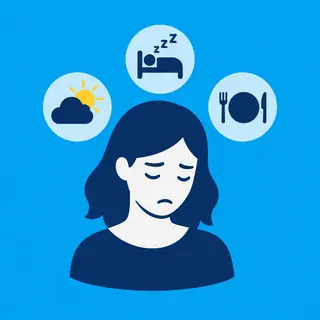
Understanding Excessive Guilt in Severe Melancholic Depression
🌟 Discover how excessive guilt in severe melancholic depression impacts mental health and explore effective excessive guilt depression treatment options. This comprehensive…
Read article

Understanding Melancholic Depression Melancholic depression is a distinct and severe subtype of major depressive disorder, characterized by a profound loss of pleasure in nearly all activities, a lack of reactivity to positive events, and a distinct quality of mood that feels qualitatively different from grief or ordinary sadness. This condition often presents with psychomotor disturbances—either noticeable slowing of movement and speech (psychomotor retardation) or agitated restlessness—along with early morning waking, worsened mood in the morning, significant weight loss, and excessive or inappropriate guilt. Unlike other forms of depression, melancholic features are often more biologically driven, meaning they may respond better to physical treatments like antidepressant medication, electroconvulsive therapy (ECT), or other somatic interventions rather than psychotherapy alone. Recognizing this severe type is critical because it requires timely, targeted care to prevent chronicity and improve outcomes.

🌟 Discover how excessive guilt in severe melancholic depression impacts mental health and explore effective excessive guilt depression treatment options. This comprehensive…
Read article
🌟 Discover the complexities of melancholic depression, a severe mood disorder characterized by profound despair and loss of pleasure. Learn about melancholic…
Read article
🌟 Discover how melancholic depression often leads to significant weight loss and appetite changes, driven by profound sadness and emotional distress. This…
Read article
🌟 Discover essential Melancholic depression support groups and resources that can help you navigate your mental health journey. Find community, understanding, and…
Read article
🔍 Discover essential melancholic depression prevention strategies that identify vulnerability factors early. Empower yourself with knowledge and practical steps to reduce risk,…
Read article
🌟 Discover the key Melancholic depression symptoms explained in this guide, helping you recognize the distinguishing signs of this severe form of…
Read article
🌟 Discover essential insights into medication depression severe melancholic treatment options. This guide covers effective therapies, helping those affected understand their choices…
Read article
🌟 Explore effective treatmentresistant melancholic depression recovery strategies that combine medication, therapy, and lifestyle changes, offering renewed hope and personalized pathways to…
Read article
🌟 Discover how anhedonia devastates pleasure in melancholic depression and explore effective anhedonia treatment strategies for depression, empowering individuals with vital insights,…
Read article
🌟 Explore the spectrum of depression severity types explained, highlighting where the melancholic type fits. This vital guide helps you understand different…
Read article
🌟 Discover essential melancholic depression treatment options in this comprehensive guide, empowering you with effective strategies and resources to manage and overcome…
Read article
🌟 Discover how stress triggers melancholic depression symptoms, highlighting the crucial link between emotional strain and severe mood disorders. Our comprehensive guide…
Read articleMelancholic depression is a distinct and severe subtype of major depressive disorder, characterized by profound anhedonia, psychomotor disturbances, and a lack of reactivity to positive events. Unlike typical depression, this condition often feels physically and emotionally immobilizing, and it requires specialized recognition and treatment. On Mind Care Guide, we provide evidence-based insights, coping strategies, and clinical resources to help you or your loved ones navigate this challenging mood disorder with clarity and hope.
Melancholic depression is marked by a near-total loss of pleasure in almost all activities, even those previously enjoyed. Individuals often experience early morning awakening, significant weight loss, excessive guilt, and psychomotor agitation or retardation. These symptoms are typically worse in the morning and improve slightly as the day progresses, a pattern known as diurnal variation. Diagnosis requires a thorough clinical evaluation, as this subtype is more severe and biologically driven than other depressive presentations.
Understanding these hallmark signs is critical for early intervention. If you notice persistent anhedonia alongside physical slowness or restlessness, it’s essential to consult a psychiatrist. The distinction matters because melancholic depression often responds better to specific treatments like tricyclic antidepressants, electroconvulsive therapy (ECT), or combined therapy, rather than psychotherapy alone. Our guide breaks down each diagnostic criterion, helping you recognize when standard depression management may be insufficient.
Melancholic depression is strongly linked to dysregulation of the hypothalamic-pituitary-adrenal (HPA) axis, leading to elevated cortisol levels. Neuroimaging studies reveal reduced hippocampal volume and altered activity in the prefrontal cortex, indicating a neurobiological basis distinct from other depressive subtypes. Genetic predisposition, chronic stress, and inflammatory processes are significant contributors. These factors make melancholic depression less responsive to environmental changes and more reliant on somatic interventions.
For readers, understanding these roots can reduce self-blame and stigma. The condition is not a character flaw or a lack of willpower—it’s a complex brain state. Knowing your risk profile (e.g., family history of melancholic depression or bipolar disorder) allows proactive monitoring. We also discuss how lifestyle factors, including sleep disruption and chronic illness, can trigger or worsen episodes, empowering you to collaborate with your care team on comprehensive risk reduction strategies.
First-line pharmacotherapy often includes serotonin-norepinephrine reuptake inhibitors (SNRIs) or tricyclic antidepressants (TCAs), which target the noradrenergic and serotonergic systems more potently than SSRIs alone. For severe or treatment-resistant cases, electroconvulsive therapy (ECT) remains the gold standard, showing remission rates of 70-90%. Ketamine infusion and transcranial magnetic stimulation (TMS) are emerging options that offer rapid relief, especially for acute suicidal ideation.
Treatment response monitoring is vital, as melancholic depression often requires higher doses and longer durations. We provide practical guidance on what to discuss with your psychiatrist, including side-effect management and combination strategies with mood stabilizers or atypical antipsychotics. Our content emphasizes that recovery is possible—though the path may require patience. Always seek care from a specialist experienced in severe mood disorders to tailor the most effective biological and psychological interventions.
While professional treatment is central, daily routines can meaningfully support stability. Structured schedules with fixed wake times, regular meals, and gentle physical activity—like walking or yoga—help regulate circadian rhythms. Given the morning worsening of symptoms, planning demanding tasks for later in the day can reduce frustration. Social support should be simplified: short, low-pressure interactions often feel more manageable than large gatherings.
Mindfulness-based cognitive therapy (MBCT) adapted for severe depression can aid in recognizing early warning signs without judgment. However, avoid overexertion; pacing yourself is key. Our guide includes downloadable checklists for creating a “crisis plan” with emergency contacts and comfort strategies. Remember, small consistent actions build resilience. If you feel overwhelmed, break tasks into micro-steps and celebrate tiny wins—this counteracts the pervasive hopelessness inherent in melancholic depression.
As a caregiver, your role is invaluable but demanding. Recognize that your loved one’s lack of responsiveness is a symptom, not a rejection. Offer practical help—preparing meals, driving to appointments, or simply sitting in silence—rather than unsolicited advice. Encourage adherence to treatment without being controlling. Watch for warning signs of worsening, such as expressed hopelessness or withdrawal from all activities, which may require immediate professional intervention.
Self-care for supporters is non-negotiable; caregiver burnout is common. Join a support group, set boundaries, and seek your own therapy if needed. Our resources include scripts for compassionate communication and decision guides for when to involve emergency services. Remember, your persistence matters. Many people with melancholic depression recover fully with proper treatment, and having a steady, non-judgmental ally significantly improves outcomes. You don’t have to fix the illness—just stay present and connected.
Melancholic depression is a severe subtype marked by profound anhedonia, psychomotor disturbances (slowing or agitation), early morning awakening, and symptoms that are worse in the morning. Unlike regular depression, positive events rarely improve mood. It is more biologically driven and often requires stronger medications or ECT, rather than lifestyle changes or psychotherapy alone.
For most cases, medication is the cornerstone because of the neurobiological dysfunction involved. However, in mild forms, structured psychotherapy like CBT, combined with strict sleep and activity routines, may help. That said, treatment resistance is common, so if symptoms persist beyond 4-6 weeks, psychiatric evaluation for pharmacotherapy or neuromodulation (e.g., TMS, ECT) is strongly recommended.
With appropriate treatment—typically TCAs, SNRIs, or ECT—significant improvement often occurs within 4-8 weeks, but full remission may take 3-6 months. Severity, medical comorbidities, and treatment adherence affect timelines. Maintenance treatment is usually recommended for at least a year after remission to prevent relapse, with long-term care for those with recurrent episodes.
Not necessarily. While it can be recurrent, many individuals experience single episodes or long periods of stability after effective treatment. Episodes tend to be more severe, but with ongoing psychiatric care, mood stabilizers if needed, and lifestyle vigilance, you can manage or prevent future episodes. It’s best viewed as a chronic but highly treatable condition, not a life sentence.
Seek immediate ER or crisis hotline (e.g., 988) if the person expresses suicidal thoughts with a plan, shows severe agitation, stops eating/drinking, or becomes unable to care for themselves. Also, if you notice sudden improvement after deep despair—this can paradoxically signal a decision to self-harm. Never leave them alone in acute crisis; professional inpatient care may be life-saving.