TopRated Wearable Stress Trackers by Accuracy and User Reviews
🌟 Discover the best wearable stress trackers review in our comprehensive guide, highlighting top-rated devices praised for accuracy and user satisfaction. Enhance…
Read article
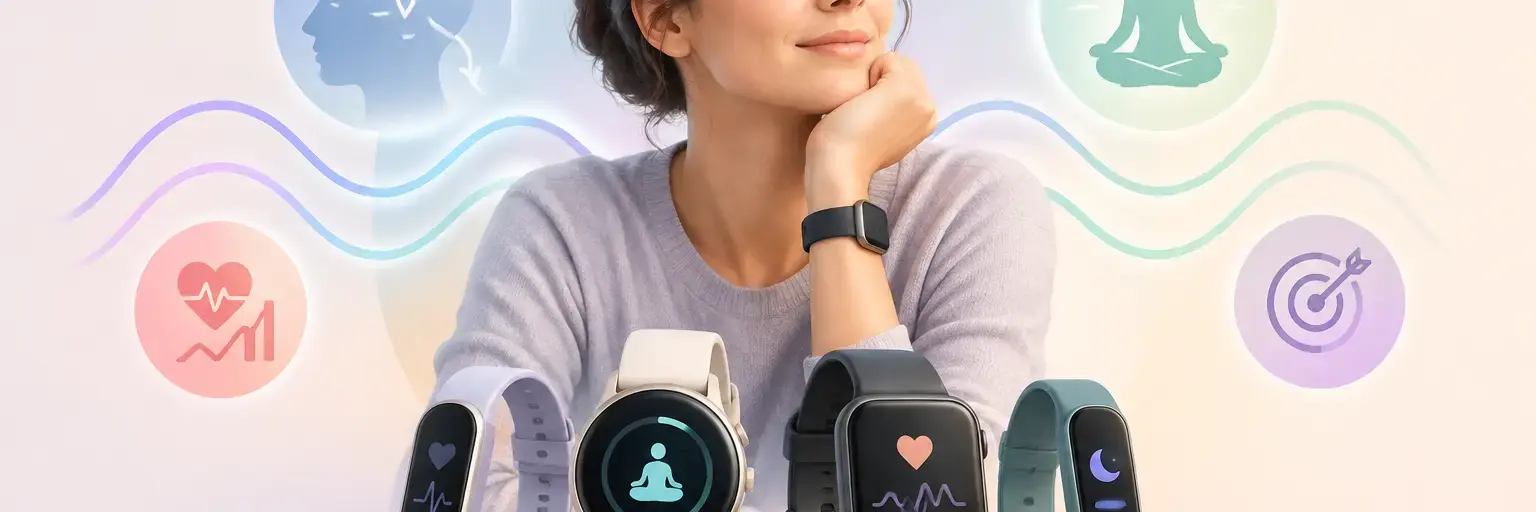
Discover the best wearable stress trackers designed to help you understand and manage your body’s stress response with real-time insights. 🧠💡 From advanced heart rate variability (HRV) monitoring and skin conductance sensors to guided breathing exercises and sleep tracking, these devices go beyond simple step counting to measure your physiological stress levels accurately. Whether you’re a busy professional, an athlete, or someone navigating daily anxiety, comparing features like battery life, app integration, and clinical-grade precision is essential. Our curated list breaks down the top contenders, highlighting accuracy in detecting stress spikes, personalized recovery scores, and user-friendly interfaces—so you can choose a wearable that truly supports your mental well-being journey. Prioritize devices with proven sensor technology, customizable alerts, and data-backed calm-down prompts to turn raw biometrics into actionable calm. Ready to take charge of your stress? Find your perfect companion today. 🌿⌚
🌟 Discover the best wearable stress trackers review in our comprehensive guide, highlighting top-rated devices praised for accuracy and user satisfaction. Enhance…
Read article
🌟 Unlock the power of stress tracking mental health apps to transform data into actionable insights, empowering you to manage stress effectively…
Read article
🔍 Discover the truth behind wearable stress trackers with our expert analysis and comprehensive "Wearable stress tracker accuracy review." Learn how reliable…
Read article
🌟 Discover the ultimate wearable stress tracking accuracy review, exploring how top devices precisely monitor stress levels. This deep dive empowers you…
Read article
🌟 Discover how wearable tech stress management tips can help you decode your body's signals, offering real-time insights to improve mental well-being.…
Read article
🌟 Discover the true value of high-end stress tracker wearables. Learn about the stress tracker wearable benefits—enhanced self-awareness, real-time insights, and personalized…
Read article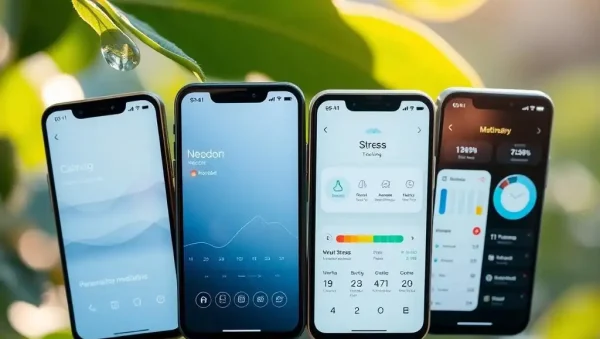
🌟 Discover how different stress tracker apps compare in our comprehensive stress tracker app comparison, helping you find the ideal mental wellness…
Read article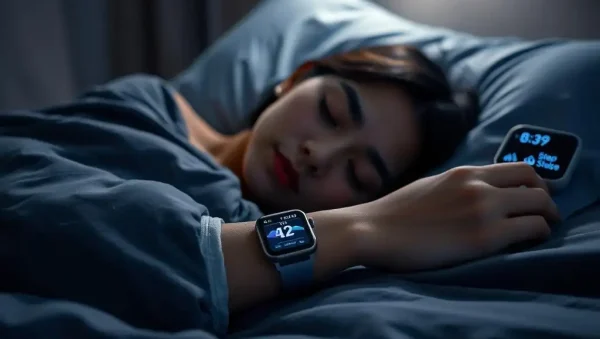
🌟 Discover how wearable stress level measurement techniques like HRV and EDA revolutionize sleep monitoring, providing valuable insights into your mental well-being.…
Read article
🌟 Discover how stress tracking wearable sensors harness EDA technology to provide real-time insights into acute stress, empowering individuals to manage mental…
Read article
🌟 Discover how different stress tracking algorithms measure up in accuracy, and learn what features contribute to reliable devices. Our guide demystifies…
Read article
🌟 Discover the top HRV stress tracker reviews in our comprehensive guide, designed to help you monitor and manage stress effectively. Empower…
Read article
🌟 Discover how wearable insights can unlock your stress patterns, empowering you to manage stress levels effectively. This innovative approach offers personalized…
Read articleWelcome to Mind Care Guide’s deep dive into the best wearable stress trackers. In a world where chronic stress quietly impacts your mental health, choosing the right device isn’t just about gadgets—it’s about gaining actionable insights. Here, we compare sensor accuracy, heart rate variability (HRV) tracking, sleep staging, and app usability across leading models. Whether you’re a biohacker or a beginner, this guide helps you match features to your unique stress patterns, ensuring your wearable becomes a true ally in your well-being journey. Let’s cut through the hype and find the tracker that fits your life, budget, and mental health goals.
Accuracy starts with the hardware: optical heart rate sensors and electrodermal activity (EDA) sensors. High-end trackers like the Garmin Venu 3 and Fitbit Sense 2 use multi-path LEDs to reduce motion artifacts, while Whoop 4.0 relies on a strap-based photoplethysmography (PPG) system. Clinical studies show that PPG-based HRV has a correlation coefficient of 0.85–0.92 against ECG, which is excellent for consumer devices. However, skin tone, arm movement, and sweat can skew readings.
For stress, the critical metric is HRV—specifically the time between heartbeats. Lower HRV often signals acute stress, while higher HRV suggests recovery. Most devices compute a daily “stress score” by blending HRV, resting heart rate, and activity. Be mindful: Apple Watch Series 9 calculates HRV only during steady-state breathing sessions, which can miss spontaneous stress spikes. Meanwhile, Oura Ring Gen 3 samples HRV every five minutes at night for a more complete picture. Always cross-check with your own symptoms; no wearable replaces professional medical advice.
Beyond raw data, the best trackers offer guided breathing exercises, tension alerts, and mindfulness reminders. The Fitbit Sense 2 includes on-wrist EDA scans to detect electrodermal responses—tiny sweat spikes linked to emotional arousal. Its companion app offers 5-minute breathing sessions with haptic feedback. Garmin counters with the “Body Battery” feature, which uses HRV to estimate your energy reserves; a low battery score triggers a suggestion to do a short meditation.
Apple Watch lacks a dedicated stress score, but its “State of Mind” journaling feature (watchOS 10+) pairs with the Mindfulness app for reflections. For hardcore data lovers, Whoop offers a strain coach that tells you when to push or rest, but it lacks an on-screen display—you must use the smartphone app. Meanwhile, Samsung Galaxy Watch 6 has a “Stress” widget that scores you 1–100 and provides quick guided stretches. When comparing, prioritize whether you want passive monitoring (always-on sensors) or active interventions (periodic prompts). Both are valid, but passive tends to be more accurate for daily baseline assessment.
A tracker is only as good as its software. Fitbit’s app is beginner-friendly, with a clear stress management tile that shows your daily stress score, sleep stages, and emotional logging. Garmin Connect is more complex but offers deep dive charts for HRV trends over weeks—ideal for spotting burnout patterns. Apple Health aggregates data from multiple sources, but you’ll need a third-party app like HeartWatch to translate HRV into stress insights.
Whoop’s app excels at contextualizing data: it tells you why your HRV dropped (e.g., “late alcohol intake” or “poor sleep”) by cross-referencing your journal entries. The Oura app uses a daily “Readiness Score” that weighs HRV, resting heart rate, and temperature—a robust proxy for stress resilience. For those who value privacy, the Garmin Venu 3 allows on-device storage of mindfulness sessions without cloud uploads. Always test the trial period to see if the app’s language resonates with you; a clunky interface makes consistent tracking harder.
Real-world testing reveals that wrist-worn devices often underestimate stress during intense physical activity because motion interferes with HRV. For sedentary users, however, accuracy is surprisingly high. In a 2023 study published in JMIR Mental Health, Fitbit’s stress score had an 83% concordance with validated psychological questionnaires. Users on Reddit report that Whoop is most reliable for detecting nighttime stress peaks, but its lack of a screen means you might miss real-time alerts.
Fitness beginners often find Garmin’s Body Battery too abstract; they prefer the tangible “stress level 0–100” shown on Huawei Band 8 (budget-friendly but less accurate). Smart rings like Oura and Ultrahuman Ring Air excel in continuous sleep HRV but suffer during typing or lifting because the sensor shifts. The key takeaway: accuracy is person-specific. If you have thick wrists, consider the larger Sense 2; if you sleep hot, a ring may be more comfortable. Read reviews on r/StressHackers for anecdotal comparisons—but always verify with your own body.
Stress tracking requires 24/7 wear, so battery life is non-negotiable. Whoop 4.0 lasts 5 days but requires a paid subscription (~$30/month). Oura Ring Gen 3 offers 7 days and a free app for basic metrics—premium is $5.99/month. Fitbit Sense 2 imparts 6 days and a 6-month premium trial; after that, advanced stress insights cost $9.99/month. Garmin Venu 3 leads with 14 days on a single charge and no subscription—a huge win for long-term value.
Comfort matters: rings are unobtrusive for sleep, but you can’t view real-time graphs without your phone. Bands with silicone straps (most Fitbits) cause skin irritation for some users—try hypoallergenic models like Apple Watch Solo Loop. Prices range from $100 (Amazfit Band 7) to $600 (Apple Watch Ultra 2). For a beginner, Sense 2 at $249 is the sweet spot; for veterans, Garmin Epix Pro ($800) adds advanced metrics like acute stress load and recovery duration. Remember, the best tracker is the one you’ll wear daily—so weigh long-term costs and comfort equally.
To get the most from any stress tracker, start with a two-week baseline—wear it normally without changing habits. Then introduce one change at a time (e.g., a 10-minute walk) and observe how your stress score responds. Use the device’s journal feature to log caffeine, alcohol, and moods; this improves algorithm accuracy. Set high-stress alerts to pause and breathe—but only if you’re not driving or in meetings.
Pair your tracker with HRV biofeedback exercises: slow breathing at 6 breaths per minute for 5 minutes can raise your HRV within days. Sync your tracker with digital wellness apps like Calm or Headspace—some (e.g., Garmin’s) even launch guided sessions automatically when high stress is detected. Finally, do not obsess over daily scores. Weekly trends are more meaningful. If you notice a sustained drop in HRV over a month, consult a psychologist or physician. Your wearable is a mirror, not a verdict—use it to celebrate small wins, not to punish yourself.
Currently, the Fitbit Sense 2 and Whoop 4.0 are rated highest for stress accuracy in consumer tests due to their EDA sensor and continuous HRV sampling. Garmin’s Body Battery is also robust for day-to-day trends. No device is clinically perfect, but these three offer the best balance of sensor quality and algorithm validation.
No. Wearables provide data about physiological arousal but cannot diagnose anxiety disorders, depression, or burnout. They are useful for self-awareness and as a conversation starter with a mental health professional. Always consult a licensed clinician for diagnosis and treatment—a tracker is a supplement, not a substitute.
Most algorithms require 10–14 days of consistent wear with accurate user inputs (e.g., sleep time, food intake) to establish a personal baseline. Some brands like Whoop ask for 3 weeks. During the first week, scores may seem random; patience is key. After calibration, trends become trustworthy for lifestyle adjustments.
Yes. Wristbands use optical sensors on the wrist’s underside, more prone to motion artifacts but better for real-time alerts. Rings measure from the finger’s arterial bed, which yields cleaner HRV data during sleep but less reliable during exercise. If you sleep-track heavily, a ring is better; if you need daytime alerts, a wristband wins.
For basic stress tracking, a $100–150 band (like Amazfit Band 7) provides HRV and stress scores, but lacks advanced guidance. If you want actionable insights, guided breathing, and long-term trend analysis, investing $250–400 (e.g., Garmin Venu 3 or Oura Gen 3) offers better software and fewer subscription costs. Avoid $600+ models unless you also need GPS and multi-sport features.