
Overcome Fear and Doubt: Building Confidence Through Meditation


Welcome to Mind Care Guide, a sanctuary for your mental well-being. Feeling overwhelmed by fear and self-doubt? You're not alone. In this space, we believe everyone deserves to feel confident and empowered. Dive into our exploration of how meditation builds self-confidence quickly, and discover practical techniques to quiet your inner critic and unlock your true potential. Ready to begin your journey towards a more confident you?
Building Confidence Through Mindfulness and Meditation
- Introduction: Cultivating Inner Strength Through Mindfulness
- Understanding the Connection: Mindfulness, Self-Compassion, and Self-Worth
- Mindfulness and Meditation Techniques to Enhance Self-Confidence
- Integrating Mindfulness for Daily Confidence: Practical Strategies and Exercises
- Addressing Common Challenges in Mindfulness Practice
- Scientific Evidence: Mindfulness and its Impact on Mental Well-being
- Real-Life Applications: How Mindfulness Supports Confidence in Various Contexts
- Maintaining Confidence: Integrating Mindfulness into Your Daily Life
- Conclusion: Embrace the Power of Mindfulness for Lasting Self-Confidence
-
Frequently Asked Questions
- How does meditation contribute to building self-confidence?
- Can meditation really help me overcome fear and doubt?
- How quickly can I expect to see results in my self-confidence through meditation?
- What types of meditation are most effective for building self-confidence?
- What other resources does Mind Care Guide offer to support my mental well-being?
- Final Reflection: Cultivating Inner Strength Through Meditation
- Unleash Your Inner Strength: Start Meditating Today!
Introduction: Cultivating Inner Strength Through Mindfulness
The Power of Mindfulness for Self-Confidence and Reducing Anxiety
Mindfulness is a powerful practice that involves paying attention to the present moment without judgment. This simple act can profoundly impact our self-confidence and ability to manage anxiety. By learning to observe our thoughts, feelings, and bodily sensations as they arise, we create a space between stimulus and reaction. This space is crucial for challenging negative self-talk and reducing the grip of anxious thoughts that often erode self-assurance. Consistent practice helps us recognize that thoughts are just thoughts, not necessarily facts, which weakens their power over our perception of self.
Integrating mindfulness into daily life helps quiet the internal critic and fosters a more accepting attitude towards ourselves. Research suggests that individuals who regularly practice mindfulness report lower levels of perceived stress and anxiety. For instance, some studies indicate a reduction in anxiety symptoms by as much as 20-30% after an 8-week mindfulness program. This reduction in anxiety directly contributes to building self-confidence because it frees up mental energy previously consumed by worry and self-doubt, allowing for greater presence and clarity in actions and interactions. This is one way meditation builds self-confidence effectively.
How Limiting Beliefs Hinder Us and How Mindfulness Can Help
Limiting beliefs are deeply ingrained assumptions we hold about ourselves, others, or the world, often formed early in life. These beliefs, such as "I'm not good enough," "I always fail," or "I don't deserve happiness," act as invisible barriers, preventing us from pursuing goals, taking risks, and recognizing our true potential. They fuel self-doubt and anxiety, creating a vicious cycle where fear of failure reinforces the belief that we are incapable. Overcoming these beliefs is essential for building self-confidence and achieving personal growth.
Mindfulness provides a gentle yet effective tool for identifying and challenging these limiting beliefs. By observing our thoughts without attachment, we can begin to notice the recurring patterns of negative self-talk that stem from these beliefs. Instead of automatically accepting them as truth, mindfulness allows us to pause and question their validity.
For example, a thought like "I can't do this" might arise before a new challenge. Through mindfulness, we can observe this thought, acknowledge it without judgment, and then choose a different response, perhaps focusing on the present task or recalling past successes. This conscious choice weakens the hold of the limiting belief and strengthens our belief in our own capabilities, showing how meditation builds self-confidence by dismantling internal barriers.
Understanding the Connection: Mindfulness, Self-Compassion, and Self-Worth
How Mindfulness Cultivates Present Moment Awareness and Acceptance
Present moment awareness, the core of mindfulness, involves intentionally bringing attention to the current experience—thoughts, feelings, bodily sensations, and the surrounding environment—without evaluating or judging it. In our fast-paced lives, the mind often dwells on the past or worries about the future, pulling us away from the only reality we truly inhabit: the present. This detachment from the present moment can fuel anxiety and prevent us from appreciating our current abilities and resources, thus hindering self-confidence.
Practicing mindfulness regularly trains the mind to stay anchored in the present. Through techniques like focusing on the breath or noticing sensory details, we learn to resist the pull of distracting thoughts and simply be with what is happening now. This practice cultivates acceptance – not resignation – but an acknowledgment of the present reality, including our current feelings, thoughts, and circumstances, without needing to change them immediately.
Accepting our present state, including moments of doubt or imperfection, is a foundational step in building self-confidence, as it reduces the internal conflict caused by resisting what is. It helps us realize that our worth isn't dependent on being perfect or constantly successful.
The Role of Self-Compassion in Boosting Self-Worth and Reducing Self-Criticism
Self-compassion is extending kindness, understanding, and acceptance to ourselves, especially during times of suffering, failure, or perceived inadequacy. It involves recognizing that imperfection, struggle, and failure are part of the shared human experience. While mindfulness helps us become aware of our inner experience, self-compassion dictates how we relate to that experience, particularly when it's difficult. It's the antidote to harsh self-criticism, which is a major destroyer of self-worth and confidence.
Cultivating self-compassion involves three main components: self-kindness (treating ourselves with warmth and understanding rather than harsh judgment), common humanity (recognizing that suffering and personal inadequacy are part of being human), and mindfulness (observing our suffering without getting swept away by it). Studies have shown a strong correlation between self-compassion and higher self-worth, lower levels of depression and anxiety, and greater resilience.
For example, research indicates that individuals high in self-compassion are significantly less likely to engage in rumination after a negative event. By replacing self-criticism with self-compassion, we build a more stable and resilient sense of self-worth that is not contingent on external validation or constant achievement, fundamentally strengthening our confidence.
The Link Between Reduced Rumination and Increased Self-Confidence Through Mindfulness
Rumination is the tendency to repetitively dwell on negative thoughts or problems without actively seeking solutions. This mental loop often involves replaying past mistakes, worrying about future outcomes, or fixating on perceived flaws. Rumination is a significant drain on mental resources and a major contributor to anxiety, depression, and low self-confidence. It keeps us stuck in a cycle of negative thinking, reinforcing limiting beliefs and preventing us from taking positive action.
Mindfulness practice directly counteracts rumination by training the mind to observe thoughts without getting entangled in them. When a ruminative thought arises, mindfulness encourages us to notice it, label it (e.g., "thinking about the past," "worrying about the future"), and gently redirect our attention back to the present moment, perhaps focusing on the breath or sensory input. This practice weakens the habit of getting lost in negative thought spirals.
By reducing rumination, we free up mental space, decrease anxiety, and gain a clearer perspective on our abilities and challenges. This clarity and reduced mental clutter contribute significantly to increased self-confidence, as we are less likely to be dragged down by persistent negative self-talk and more able to focus on constructive actions. Effectively, consistent meditation builds self-confidence by dismantling the mental habits that undermine it.
Mindfulness and Meditation Techniques to Enhance Self-Confidence
Mindful Breathing for Grounding and Calmness: A Step-by-Step Approach
Mindful breathing is a foundational mindfulness technique that helps anchor you to the present moment, reduce anxiety, and cultivate a sense of calm. This is a key starting point for anyone looking into how meditation builds self-confidence. By focusing on the simple, constant rhythm of your breath, you create a point of stability amidst internal turbulence.
Here is a basic approach:
- Find a comfortable posture: Sit upright with your spine straight, or lie down. Rest your hands comfortably.
- Close your eyes gently or soften your gaze.
- Bring your attention to your breath: Notice the physical sensations of breathing – the air entering and leaving your nostrils, the rise and fall of your chest or abdomen.
- Breathe naturally: Do not try to change your breath; simply observe it as it is.
- When your mind wanders (which it will): Gently notice where it went without judgment, and guide your attention back to the sensations of breathing.
- Continue for a set period: Start with 5-10 minutes and gradually increase the duration.
Practicing mindful breathing regularly helps build your capacity to stay present and manage difficult emotions. When faced with a confidence-challenging situation, taking even just a minute to focus on your breath can help ground you, reduce the intensity of fear or doubt, and allow you to respond more calmly and effectively.
Loving-Kindness Meditation: Cultivating Positive Emotions Towards Self and Others
Loving-Kindness Meditation (Metta) is a practice aimed at cultivating feelings of warmth, compassion, and acceptance towards oneself and others. While many focus on mindfulness for present moment awareness, Metta directly addresses the emotional landscape, making it particularly powerful for boosting self-worth and reducing self-criticism.
The practice typically involves silently repeating phrases that express goodwill and kindness, directing them progressively towards oneself, loved ones, neutral persons, difficult persons, and finally, all beings. Common phrases include: "May I be happy," "May I be healthy," "May I be safe," "May I be free from suffering."
By intentionally generating feelings of kindness towards yourself, you actively counteract negative self-talk and build a foundation of self-acceptance. This practice can feel challenging initially, especially if self-criticism is strong, but persistence can lead to significant shifts in how you relate to yourself. Studies suggest that regular Metta practice can increase positive emotions, reduce negative emotions, and even increase feelings of social connection, all of which contribute to a stronger sense of self and greater confidence in navigating relationships and challenges.
Mindful Movement: Enhancing Body Awareness and Reducing Tension
Mindful movement involves bringing conscious awareness to physical activity, whether it's walking, stretching, yoga, or even simple everyday tasks. Unlike exercising on autopilot, mindful movement encourages you to pay attention to the sensations in your body, the rhythm of your breath, and how your body moves through space. This practice helps you reconnect with your physical self, fostering a greater sense of embodiment and self-acceptance.
By tuning into bodily sensations, you can become more aware of where you hold tension (often a physical manifestation of stress or anxiety) and learn to release it. For example, noticing tension in your shoulders during a mindful walk allows you to consciously relax them. This increased body awareness can improve posture, reduce physical discomfort, and enhance your overall sense of vitality. Feeling comfortable and connected to your physical body is a crucial, often overlooked, aspect of building overall self-confidence. It helps you feel more grounded and present in any situation.
Journaling and Reflection: Identifying and Challenging Limiting Beliefs
Journaling, combined with mindfulness, is a powerful tool for exploring your inner landscape, identifying patterns of thought, and challenging limiting beliefs. Taking time to write down your thoughts and feelings, particularly after a mindfulness or meditation session, can provide valuable insights into the narratives you hold about yourself.
Start by simply writing whatever comes to mind, or use prompts related to self-doubt or areas where you lack confidence. For example:
- What thoughts arise when I consider [challenging task]?
- What negative beliefs about myself appear most often?
- Where do I think these beliefs came from?
- What evidence contradicts these negative beliefs?
After identifying a limiting belief (e.g., "I'm not smart enough"), you can use journaling to challenge it directly. Write down evidence from your life that proves the belief is not entirely true. Explore alternative, more empowering perspectives. This conscious process of externalizing thoughts and critically examining them weakens their power. Regular reflective journaling helps you gain clarity, process emotions, and actively work towards replacing self-defeating narratives with more realistic and positive ones, thereby reinforcing the self-confidence that meditation builds.
Integrating Mindfulness for Daily Confidence: Practical Strategies and Exercises
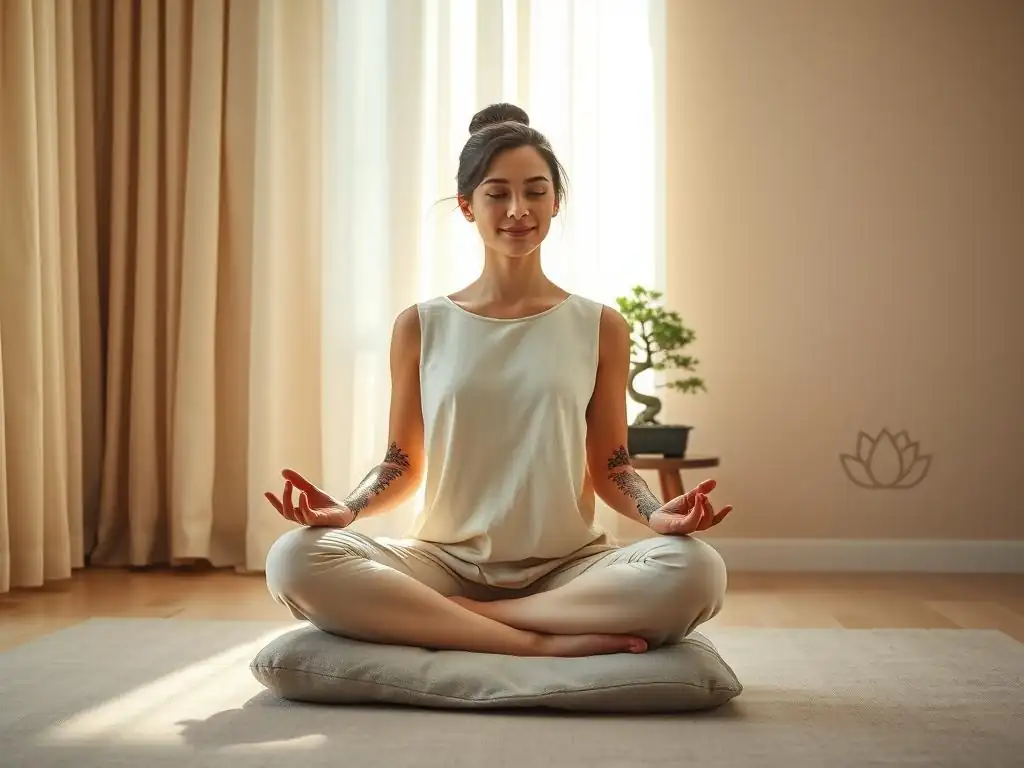
Mindful Moments Throughout the Day for Sustained Confidence
Building lasting self-confidence isn't solely about formal meditation sessions; it's also about weaving mindfulness into the fabric of your daily life. These "mindful moments" are brief opportunities to pause, check in with yourself, and anchor yourself in the present. They help maintain the benefits gained from formal practice and make mindfulness a living skill rather than just an exercise.
Examples of mindful moments include:
- Taking three mindful breaths before opening an email or answering the phone.
- Paying full attention to the sensations of eating your lunch.
- Mindfully walking between meetings or tasks, noticing the feeling of your feet on the ground.
- Pausing to notice your surroundings and senses (sight, sound, smell, touch) for 30 seconds.
- Bringing awareness to the simple act of washing your hands.
Integrating these small moments throughout the day helps cultivate a continuous thread of presence and self-awareness. This sustained awareness makes you more resilient to sudden surges of doubt or anxiety and reinforces a sense of being grounded and capable, demonstrating how consistent mindfulness helps build confidence effectively over time.
Setting Intentions and Practicing Gratitude with Mindfulness
Combining mindfulness with intention setting and gratitude practice can significantly enhance your self-confidence. Setting a daily intention involves consciously choosing how you want to show up in the world or what quality you wish to cultivate (e.g., "Today, I intend to approach challenges with courage," or "My intention is to be kind to myself"). Mindfully holding this intention throughout the day helps align your actions with your desired state of being.
Gratitude practice, when done mindfully, involves paying genuine attention to the things you are thankful for, no matter how small. Instead of just listing items, take a moment to feel the sense of appreciation in your body. This could be gratitude for a supportive friend, a beautiful sunset, or even just the ability to breathe.
Both intention setting and gratitude shift your focus from lack and fear to possibility and abundance. By intentionally focusing on positive qualities you wish to embody and appreciating the good in your life, you actively reprogram your mind to support a more confident and optimistic outlook. Research indicates that regular gratitude practice can improve mood and increase feelings of self-worth.
Using Mindfulness to Manage Fear of Failure and Build Resilience
Fear of failure is a significant barrier to self-confidence and often stems from limiting beliefs about one's capabilities or the consequences of not succeeding. Mindfulness provides a powerful framework for navigating this fear by changing your relationship with it. Instead of letting the fear paralyze you or dictate your actions, mindfulness allows you to observe the fear itself—the thoughts, emotions, and physical sensations associated with it—without getting overwhelmed.
When fear of failure arises before a challenging task, you can pause and mindfully acknowledge: "Ah, here is the feeling of fear," or "I notice thoughts about failing." By simply observing the fear without judgment, you create distance from it. This allows you to see the fear as a temporary state rather than an inherent truth about yourself.
Furthermore, mindfulness helps cultivate resilience by fostering acceptance of discomfort and setbacks as part of the learning process. It teaches you to bounce back from difficult experiences with greater ease, reinforcing the belief that you can handle challenges, even if they don't go perfectly. This resilience is fundamental to building robust and lasting self-confidence.
Addressing Common Challenges in Mindfulness Practice
Overcoming Distractions and Wandering Thoughts During Mindfulness Exercises
A common challenge in mindfulness practice is the mind's tendency to wander. Beginners often become discouraged, thinking they are "doing it wrong" because their thoughts are busy. However, recognizing and gently redirecting a wandering mind is not a failure; it is the practice. The average person has thousands of thoughts per day, and the mind is naturally designed to think and process information.
To overcome distractions:
- Normalize it: Understand that a wandering mind is completely normal. Everyone experiences it.
- Practice patience and self-compassion: Don't judge yourself for thinking. Simply notice the thought without getting involved in its content.
- Gently redirect: As soon as you notice your mind has wandered, gently guide your attention back to your anchor (like the breath). Think of it like training a puppy – you gently lead it back, not scold it.
- Shorten the duration: If long sessions are difficult, start with just 2-3 minutes of focused practice. Consistency in short bursts is more effective than infrequent, long, frustrating sessions.
Each time you notice your mind wandering and gently bring it back, you strengthen the "muscle" of attention and focus. This improved ability to concentrate and manage distractions is a direct benefit that contributes to clearer thinking and enhanced self-confidence in daily tasks.
Working with Difficult Emotions and Sensations in Mindfulness
Mindfulness can sometimes bring difficult emotions or uncomfortable physical sensations to the surface. This can be challenging and may lead some to avoid practice. Emotions like sadness, anger, or anxiety, or sensations like restlessness or pain, are natural parts of the human experience, but we often try to push them away. However, resisting difficult experiences can actually amplify them.
Mindfulness offers a way to approach these difficulties with greater ease:
- Acknowledge and label: Simply notice the emotion or sensation and label it gently (e.g., "There is sadness," "Noticing tightness in the chest"). This creates space.
- Investigate with curiosity: Without judgment, explore the physical sensations associated with the emotion. Where do you feel it? What are its qualities (e.g., tingling, pressure, heat)?
- Breathe into it: Imagine your breath flowing into and around the area of discomfort. This doesn't mean the sensation disappears, but it can soften the edges and help you tolerate it.
- Remember impermanence: Recognize that all emotions and sensations are temporary; they arise and pass away.
Learning to be with difficult emotions and sensations in a mindful way builds emotional resilience. It teaches you that you can handle discomfort without being overwhelmed by it. This capacity to face internal difficulties with presence and acceptance is a cornerstone of building robust self-confidence.
Adapting Mindfulness Practices to Suit Individual Needs and Preferences
Mindfulness is not a one-size-fits-all practice. What works for one person may not work for another, and what is helpful on one day may be challenging on the next. It's important to explore different techniques and find what resonates with you, adapting the practice to fit your lifestyle, personality, and current needs.
If sitting meditation feels too difficult due to restlessness, try mindful walking or mindful movement. If focusing on the breath is challenging, try focusing on sounds or visual anchors. If you prefer guided practices, explore the numerous apps and online resources available (though remember to choose freely available ones for this article's constraints). The key is experimentation and flexibility.
Furthermore, the duration and frequency of practice can be adapted. Even 5 minutes of mindful breathing can be beneficial. If you have a busy schedule, look for opportunities to integrate mindfulness into existing activities, like your commute or doing chores. Finding a sustainable approach that fits your life increases the likelihood of consistent practice, which is essential for meditation builds self-confidence effectively over time. Tailoring your practice ensures it remains a supportive tool, not another source of stress.
Scientific Evidence: Mindfulness and its Impact on Mental Well-being
Research Studies on Mindfulness's Benefits for Confidence, Anxiety, and Depression
A substantial body of scientific research supports the benefits of mindfulness and meditation for mental well-being, including its positive impact on self-confidence, anxiety, and depression. Studies using techniques like Mindfulness-Based Stress Reduction (MBSR) and Mindfulness-Based Cognitive Therapy (MBCT) have shown significant improvements in participants' psychological health. For example, meta-analyses of numerous studies consistently report moderate to large effect sizes for mindfulness interventions in reducing symptoms of anxiety and depression.
Specifically regarding confidence, research indicates that mindfulness practices, by reducing self-criticism and rumination while increasing self-compassion and present moment awareness, directly contribute to a more stable and positive self-image. A study might show, for instance, an average increase in self-efficacy scores (a measure of confidence in one's ability to succeed) among participants who completed a mindfulness program compared to control groups. While the phrase "Meditation builds selfconfidence quickly" might be an oversimplification for everyone, the evidence strongly supports that consistent meditation practice does effectively build confidence over time by addressing its root causes.
The Neuroscience of Mindfulness: How it Changes the Brain for Improved Emotional Regulation
Neuroscience research provides insights into how mindfulness impacts the brain, leading to improved emotional regulation and increased confidence. Studies using fMRI (functional magnetic resonance imaging) have shown that regular mindfulness practice can lead to structural and functional changes in key brain areas. For instance, there is evidence of increased gray matter density in areas associated with learning, memory, and emotional regulation, such as the hippocampus and the prefrontal cortex.
Conversely, activity and size may decrease in the amygdala, often referred to as the brain's "fear center," which is highly active during stress and anxiety. This suggests that mindfulness helps to dampen the brain's automatic threat response. Furthermore, mindfulness practice strengthens the connections between the prefrontal cortex (involved in executive functions and self-awareness) and the amygdala, allowing for greater conscious regulation of emotional reactions. These changes in brain circuitry support a greater capacity to manage fear and stress, respond skillfully to challenges, and cultivate a more stable emotional baseline, all of which are foundational for building and maintaining self-confidence.
Understanding the Impact of Mindfulness on Reducing Stress and Enhancing Focus
Beyond emotional regulation, mindfulness has been shown to significantly reduce stress and enhance cognitive functions, particularly focus and attention. Chronic stress is a known detriment to self-confidence, often leading to feelings of overwhelm, burnout, and self-doubt. Mindfulness practices activate the body's relaxation response, counteracting the physiological effects of stress.
Research demonstrates that mindfulness training improves attention span and the ability to sustain focus, even on challenging tasks. This is thought to be due to strengthening neural networks associated with attention control. For example, studies show that individuals who practice mindfulness perform better on tasks requiring sustained attention and are less prone to distraction.
Reduced stress levels free up mental resources, while enhanced focus allows individuals to engage more effectively with tasks and challenges. Successfully navigating challenges with greater presence and less stress reinforces a sense of competence and capability, further illustrating how meditation builds self-confidence by improving fundamental mental capacities.
Real-Life Applications: How Mindfulness Supports Confidence in Various Contexts

Mindfulness for Public Speaking: Managing Nerves and Enhancing Presence
Public speaking is a common source of anxiety and a significant challenge to self-confidence for many people. The fear of being judged, making mistakes, or forgetting key points can be overwhelming. Mindfulness offers practical strategies to manage these nerves and enhance your presence when speaking to an audience.
Before a presentation, mindful breathing can help calm the nervous system and ground you in the present moment, reducing the intensity of performance anxiety. During the speech, bringing mindful awareness to your body can help you notice and release physical tension (like tight shoulders or a racing heart) without letting it derail you. Mindfully observing thoughts about judgment or failure as just thoughts, rather than facts, weakens their power.
By practicing present moment awareness, you can focus more fully on your message and connect authentically with your audience, rather than being consumed by internal fear. This presence makes you appear more confident and allows you to adapt more effectively to the situation, demonstrating how meditation builds self-confidence for specific high-pressure situations.
Mindfulness for Leadership: Fostering Empathy and Effective Communication
In leadership roles, self-confidence is crucial, but so are empathy and the ability to communicate effectively. Mindfulness supports these qualities by enhancing self-awareness and the ability to understand and connect with others. Mindful leaders are better equipped to manage their own stress and reactions, allowing them to respond to challenging situations with greater composure and clarity.
By practicing mindfulness, leaders can become more attuned to their own emotional state and how it might impact their team. They also develop a greater capacity to listen deeply and empathetically to others, truly hearing their perspectives and concerns. This improved emotional intelligence fosters stronger relationships and more effective communication within a team. A leader who is present, calm, and genuinely connected to their team projects a quiet confidence that inspires trust and collaboration, showcasing the broader impact of mindfulness on professional self-assurance.
Mindfulness for Creative Expression: Overcoming Self-Doubt and Enhancing Flow
Creative pursuits, whether writing, painting, music, or any other form of expression, are often plagued by self-doubt, fear of judgment, and the pressure to produce something "good." Mindfulness can help creative individuals overcome these internal obstacles and tap into a state of flow.
Mindfulness practice helps quiet the inner critic that often stifles creativity. By observing judgmental thoughts without getting caught up in them, artists can create space for experimentation and exploration. Mindful presence allows for a deeper connection to the creative process itself, focusing on the act of creating rather than solely on the outcome or potential reception.
When you are fully immersed in the present moment of creation, free from self-conscious worries, you are more likely to enter a state of flow, where ideas come more easily and the process feels effortless. This increased freedom from self-doubt and enhanced ability to focus on the creative task directly contribute to greater confidence in one's artistic abilities and expression.
Maintaining Confidence: Integrating Mindfulness into Your Daily Life
Creating a Sustainable Mindfulness Practice for Long-Term Well-being
Building self-confidence through meditation and mindfulness is not a one-time fix but an ongoing process that requires consistent practice. Creating a sustainable routine is key to reaping long-term benefits and maintaining the self-assurance you cultivate. Sustainability is more about consistency than duration or intensity.
To create a sustainable practice:
- Start small: Begin with just 5-10 minutes a day. It's better to meditate for a short time daily than for an hour once a week.
- Be flexible: Life happens. If you miss a day, don't dwell on it. Simply start again the next day.
- Find your time: Experiment to find the time of day that works best for you, whether it's first thing in the morning, during a lunch break, or before bed.
- Stack habits: Try pairing your mindfulness practice with an existing habit, like meditating for 5 minutes after brushing your teeth.
- Use reminders: Set a gentle alarm or use a meditation app reminder to help you stay on track.
Making mindfulness a regular part of your routine, even in small ways, reinforces its benefits over time. This consistent effort is what truly allows meditation builds self-confidence as a stable and enduring quality.
Combining Mindfulness with Other Self-Care Practices
Mindfulness is a powerful tool, but it works best when integrated into a broader self-care routine. Combining mindfulness with other practices that support physical and mental health creates a holistic approach to well-being that enhances self-confidence from multiple angles.
Consider combining mindfulness with:
- Regular Exercise: Physical activity reduces stress and improves mood, complementing the calming effects of mindfulness. Mindful movement is a great way to combine these.
- Healthy Eating: Nourishing your body impacts your energy levels and mental clarity, supporting your ability to practice mindfulness and feel good about yourself.
- Sufficient Sleep: Lack of sleep negatively affects mood, focus, and resilience. Prioritizing sleep enhances your capacity for mindfulness and emotional regulation.
- Connecting with Nature: Spending time outdoors can be inherently mindful and restorative, reducing stress and increasing feelings of peace.
- Engaging in Hobbies: Pursuing activities you enjoy provides a sense of accomplishment and joy, boosting overall well-being and confidence.
By weaving mindfulness into a lifestyle that prioritizes overall health, you create a strong foundation for lasting self-confidence and resilience.
Life inevitably presents challenges – setbacks at work, relationship issues, health concerns, or unexpected crises. These difficult situations can easily shake our self-confidence and trigger self-doubt. Mindfulness provides an essential tool for navigating these moments with greater presence, clarity, and resilience.
When faced with difficulty, mindfulness helps you pause before reacting impulsively. By bringing awareness to the intense emotions and thoughts that arise, you can choose a response based on wisdom rather than being swept away by fear or anger. For example, if you receive negative feedback, mindfulness allows you to notice the feelings of disappointment or defensiveness without immediately believing self-critical thoughts. This enables you to process the situation more constructively.
Furthermore, by staying present, you can assess the situation more clearly and identify potential solutions or steps forward. Using mindfulness in this way reinforces your belief in your ability to handle adversity, which is a core component of true self-assurance. It demonstrates that meditation builds self-confidence not just in calm times, but precisely when you need it most.
Conclusion: Embrace the Power of Mindfulness for Lasting Self-Confidence
Recap of the Key Benefits of Mindfulness for Overcoming Limiting Beliefs and Building Self-Confidence
Mindfulness and meditation offer a transformative path to overcoming fear, doubt, and limiting beliefs, paving the way for genuine and lasting self-confidence. By cultivating present moment awareness, we reduce anxiety and gain clarity. Through self-compassion, we dismantle harsh self-criticism and build a foundation of inherent self-worth. By lessening the grip of rumination, we free ourselves from negative thought loops that erode our sense of capability.
Techniques like mindful breathing, loving-kindness meditation, mindful movement, and reflective journaling provide practical methods to integrate these principles. Scientific evidence underscores these benefits, showing how mindfulness physically changes the brain to improve emotional regulation, reduce stress, and enhance focus. These benefits translate into real-life confidence in various contexts, from public speaking to creative expression. The journey of how meditation builds self-confidence is multifaceted, addressing the mind, body, and emotions.
Encouragement to Integrate Mindfulness into Daily Life for Enhanced Well-being
Building self-confidence is a continuous journey, and mindfulness is a steadfast companion on that path. It's not about eliminating challenges or negative emotions, but about developing the capacity to meet them with greater awareness, acceptance, and resilience. The power to build self-confidence lies within you, and mindfulness is a practice that helps you access that inner strength.
We encourage you to explore these practices, start small, be patient with yourself, and integrate mindfulness into your daily life in ways that feel authentic and sustainable. Whether through formal meditation sessions or brief mindful moments throughout the day, consistent practice will gradually but surely help you quiet the voice of doubt, strengthen your belief in yourself, and cultivate a profound sense of self-assurance. Embrace this journey, and discover the resilient and confident person you are capable of being.
Frequently Asked Questions
How does meditation contribute to building self-confidence?
Meditation helps by calming the inner critic and promoting self-awareness. This allows you to recognize your strengths and manage negative thoughts, ultimately boosting your confidence.
Can meditation really help me overcome fear and doubt?
Yes, meditation can be a powerful tool. It teaches you to observe your thoughts and emotions without judgment, allowing you to manage fear and doubt more effectively and react with more calm.
How quickly can I expect to see results in my self-confidence through meditation?
While individual results vary, many people notice a positive shift in self-confidence within a few weeks of consistent meditation practice. Remember regularity is key.
What types of meditation are most effective for building self-confidence?
Mindfulness meditation, focusing on the present moment, and loving-kindness meditation, which cultivates compassion for oneself and others, are both highly effective for enhancing self-esteem and confidence.
What other resources does Mind Care Guide offer to support my mental well-being?
Mind Care Guide provides a comprehensive range of information, support, and resources for various mental health challenges, including articles, guided meditations, and links to professional help.
Final Reflection: Cultivating Inner Strength Through Meditation
The power of meditation to rapidly build self-confidence is not merely a trendy wellness practice; it's a profound and accessible tool for navigating the complexities of modern life. In a world saturated with external pressures and constant demands, the ability to cultivate inner peace and unshakeable self-belief is more critical than ever. This article explored the practical techniques and underlying mechanisms that allow meditation to achieve this seemingly rapid transformation.
The journey from self-doubt to self-assurance is rarely linear, but the consistent practice of meditation offers a roadmap for navigating this challenging terrain. It's a process of self-discovery, of peeling back layers of conditioned fear and uncovering the inherent strength and wisdom within. This resonates deeply with my own experience; I've witnessed firsthand the transformative power of consistent meditation in silencing the inner critic and fostering a sense of calm self-acceptance. The mind is everything. What you think you become.
- Buddha. This quote encapsulates the core principle at play: by changing our inner dialogue, we change our outer reality.
Now, consider your own life. What areas are currently overshadowed by fear and doubt? I invite you to experiment with the techniques discussed in this article – even just five minutes a day can make a difference. Begin your meditation journey today, not as a means to an end, but as a pathway to self-discovery and the cultivation of a stronger, more confident you. Embrace the stillness, listen to your inner voice, and watch as your self-belief blossoms.
Unleash Your Inner Strength: Start Meditating Today!
Thanks for taking the time to explore the power of meditation in overcoming fear and doubt. You've now learned valuable techniques to build confidence and inner peace. Ready to put your newfound knowledge into practice?
- Begin your daily meditation journey today. Even 5 minutes a day can make a significant difference. Find a quiet space, close your eyes, and focus on your breath.
- Share this article with a friend who might also benefit from learning about the transformative power of meditation. Let's build a supportive community together!
- Try a guided meditation app for extra support and a variety of techniques to explore.
What small step will you take today to cultivate more confidence and inner peace?