
Unlock Mindfulness on the Go: Your Beginner's Guide to Walking Meditation.


Welcome to Mind Care Guide, a space dedicated to nurturing your inner peace and navigating the complexities of mental well-being.
Feeling overwhelmed? Perhaps you're searching for a simple way to cultivate calm amidst the chaos of daily life. Our latest guide, Walking Meditation for Beginners, offers just that – a gentle path to mindfulness you can take with you, anywhere. Discover how each step can become a moment of presence and unlock a deeper connection with yourself. Intrigued? Let's begin...
Cultivating Inner Peace Through Movement: A Guide to Walking Meditation
- Introduction to Walking Meditation: Finding Stillness in Motion
- Preparing for Your Walking Meditation Session
- Practicing the Walking Meditation Technique
- Tips for Beginners to Enhance Walking Meditation
- Common Pitfalls and How to Overcome Them
- Integrating Walking Meditation into Daily Life
- Advanced Techniques for Deepening Your Practice
- The Evolving Landscape of Walking Meditation
-
Frequently Asked Questions
- ### What exactly is walking meditation, and how does it differ from seated meditation?
- ### Is walking meditation suitable for beginners, or does it require prior meditation experience?
- ### What are the key benefits of incorporating walking meditation into my routine?
- ### How long should a walking meditation session typically last for a beginner, and where should I practice?
- ### What are some common mistakes to avoid when practicing walking meditation as a beginner?
- Final Reflection: The Path to Presence Begins with a Single Step
- Unleash Your Inner Calm: Start Walking Meditating Today!
Introduction to Walking Meditation: Finding Stillness in Motion
What is Walking Meditation and Its Purpose?
Walking meditation is a mindfulness practice where the act of walking becomes the focus of awareness. Unlike a casual stroll or a brisk walk for exercise, the primary purpose is not to get somewhere or burn calories, but to be fully present with each step, each breath, and the sensations that arise. It's a way to bring mindfulness into an activity we do every day, transforming the mundane into a sacred opportunity for presence. For many, particularly those who find seated meditation challenging, walking meditation for beginners offers a more accessible entry point into cultivating stillness and focus.
The purpose of this practice is to cultivate a state of alert, relaxed awareness while in motion. It helps ground you in the present moment, reducing rumination about the past or anxiety about the future.
By paying deliberate attention to the physical sensations of walking – the lifting of the foot, the swing of the arms, the feeling of the ground – practitioners develop concentration and insight. This simple form of walking meditation for beginners can be practiced almost anywhere, providing a flexible path to integrate mindfulness into a busy life, fostering a deeper connection with oneself and the environment.
Mental and Physical Benefits of Walking Meditation
Engaging in walking meditation offers a wealth of benefits that extend beyond the practice itself. Mentally, it can significantly reduce stress and anxiety. Studies suggest that regular mindfulness practices, including mindful walking, can lead to a measurable decrease in cortisol levels, the body's primary stress hormone. Participants in mindfulness programs incorporating walking meditation have reported up to a 30% reduction in perceived stress over an 8-week period. It also enhances focus and concentration, training the mind to stay anchored in the present moment, which can improve cognitive function and productivity throughout the day.
Physically, even a slow, mindful walk contributes positively to well-being. While not as intense as aerobic exercise, it promotes gentle circulation, can help regulate blood pressure, and improves balance and coordination. For individuals who may have physical limitations that make vigorous exercise difficult, walking meditation provides a gentle way to incorporate movement. Furthermore, the combination of physical activity and mental focus can lead to improved sleep quality and a greater sense of overall vitality. This makes walking meditation for beginners a holistic practice benefiting both mind and body.
Preparing for Your Walking Meditation Session
Choosing a Suitable Environment for Walking Meditation
Selecting the right location is key to a successful walking meditation practice, especially when you are just starting out with walking meditation for beginners. Look for a place where you feel safe, comfortable, and relatively undisturbed. This could be a quiet path in a park, a secluded garden, a less-used hallway or room in your home, or even a designated loop in your backyard.
The key is to minimize external distractions as much as possible initially. A flat, even surface is often preferable to avoid needing to constantly adjust your balance, allowing you to focus more easily on the sensations of walking.
Consider the time of day as well. Early mornings or late evenings might offer more solitude. If practicing indoors, ensure you have enough space to walk a short distance back and forth, perhaps 10-15 steps, or a circular path. While the goal is eventually to be mindful anywhere, starting in a controlled environment makes it easier to cultivate the necessary focus for walking meditation for beginners. As you become more comfortable, you can gradually practice in more dynamic settings, like a busy street, integrating mindfulness into the flow of daily life.
Setting an Intention for Your Practice
Before you begin walking, take a moment to pause and set an intention for your walking meditation session. An intention isn't a goal in the sense of achieving a specific outcome, but rather a gentle reminder of why you are practicing and what quality you wish to cultivate. For example, your intention might be to simply be present with each step, to cultivate patience, to notice the sensations in your feet, or to practice self-compassion. For walking meditation for beginners, a simple intention like "I intend to be aware of my walking" is perfectly sufficient.
Setting an intention helps to focus your mind from the outset and provides a gentle anchor to return to if your mind wanders. It grounds the practice in purpose and infuses the physical act of walking with meaning. You can silently repeat your intention a few times before you start moving. Remember that the intention is a guide, not a rigid rule. If you forget your intention during the walk, simply notice that and gently bring it back to mind without judgment. This simple step significantly enhances the depth of your walking meditation for beginners.
Maintaining Proper Posture During Walking Meditation
While walking meditation is less formal than seated meditation, maintaining a comfortable and alert posture is still important. Stand tall but relaxed, allowing your shoulders to drop naturally. Your head should be balanced comfortably on your neck, and your gaze can be directed slightly downwards, about ten feet in front of you. This soft gaze helps minimize visual distractions while still allowing you to be aware of your surroundings for safety. Avoid hunching or tensing your body.
Your arms can hang naturally by your sides or swing gently with your steps, whatever feels most comfortable. The key is to allow your body to move naturally without excessive tension. Pay attention to the alignment of your spine – imagine a string gently pulling you upwards from the crown of your head. This balanced posture promotes ease of movement and helps maintain alertness without creating strain, making the experience of walking meditation for beginners more comfortable and sustainable.
Practicing the Walking Meditation Technique

Focusing on the Sensation of Your Feet
The most common anchor in walking meditation, particularly for beginners, is the sensation of the feet in contact with the ground. As you begin to walk slowly, bring your attention fully to your feet. Notice the feeling of the sole of your foot as it lifts from the ground, the brief moment it is in the air, and the sensation of the heel making contact first, followed by the rest of the foot rolling down. Feel the pressure on the sole as your weight shifts, and the push-off from the toes.
Break down the movement into distinct phases if helpful: lifting, moving forward, placing down. Pay attention to the subtle changes in pressure, temperature, and texture. If your mind wanders – which it will – simply notice where it went and gently guide your attention back to the physical sensations in your feet. This continuous returning to the anchor is the core practice of mindfulness and is crucial for developing concentration in walking meditation for beginners.
Coordinating Breath with Your Steps
Another effective way to deepen your walking meditation is to bring awareness to your breath and potentially coordinate it with your steps. There's no single "right" way to do this; the goal is to find a natural rhythm that feels comfortable. You might notice the length of your inhale and exhale and see how many steps correspond to each.
For example, you might inhale for three steps and exhale for three steps. Alternatively, you might simply be aware of the feeling of the breath in your body as you walk, noticing the gentle rise and fall of your chest or abdomen.
The breath provides a secondary anchor that can work in conjunction with focusing on your feet. If focusing solely on foot sensations feels too intense or difficult, shifting some attention to the breath can provide a different point of focus. The key is not to force a specific breath pattern but to observe the natural rhythm of your breathing while walking. Experiment with what feels most grounding and relaxing for your walking meditation for beginners practice.
Managing Distractions and Redirecting Focus
Distractions are a natural and inevitable part of any mindfulness practice, including walking meditation. You will notice thoughts popping up about your day, sounds from your environment, or physical sensations in your body other than your feet. The practice isn't about eliminating these distractions but about how you relate to them. When you notice your mind has wandered, simply acknowledge it without judgment. You might mentally note "thinking" or "hearing."
Once you've acknowledged the distraction, gently but firmly redirect your attention back to your chosen anchor – the sensations in your feet, your breath, or both. Think of your attention like a puppy on a leash; it will wander, and you gently guide it back. Each time you notice wandering and return your focus, you are strengthening your "mindfulness muscle." This process of noticing and returning is the core work of walking meditation for beginners and is where the real benefits of increased focus and awareness are cultivated. Be patient and compassionate with yourself; wandering is normal.
Tips for Beginners to Enhance Walking Meditation
Starting with Short Sessions and Gradually Increasing Duration
When you're new to walking meditation, it's best to start small to build consistency and avoid feeling overwhelmed. Aim for just 5 to 10 minutes per session initially. This short duration makes the practice feel more accessible and easier to fit into a busy schedule. A dedicated 5-minute mindful walk can be far more beneficial than trying to force a 30-minute session that feels daunting and leads to skipping practice altogether.
As you become more comfortable and find your focus improving, you can gradually increase the duration of your sessions. Add 5 minutes each week, perhaps aiming for 15-20 minutes, then eventually longer if you wish. Some experienced practitioners walk mindfully for 30-60 minutes. However, there is no magic number; the most important thing is consistency. Regular, shorter sessions of walking meditation for beginners are more effective than infrequent, long ones.
Engaging Your Senses to Deepen Awareness
While focusing on the feet is a primary anchor, you can also deepen your walking meditation by gently expanding your awareness to include other senses. As you walk, notice the feeling of the air on your skin, the temperature, or any breeze. Pay attention to the sounds around you – birds chirping, distant traffic, the rustle of leaves – without labeling or judging them. Simply notice the sounds as they arise and pass away.
You can also become aware of what you see, not by focusing on specific objects, but by noticing colors, shapes, and light in your peripheral vision with a soft gaze. Even smells can be noticed – the scent of flowers, damp earth, or rain. Engaging multiple senses helps to ground you more fully in the present moment and enriches the experience. For walking meditation for beginners, start with one or two senses and gradually open up to more as you become more comfortable.
Experimenting with Pace to Find Your Natural Rhythm
There is no prescribed speed for walking meditation; the ideal pace is one that allows you to maintain awareness without feeling rushed or unnatural. Some traditions advocate for a very slow, deliberate pace, almost like slow-motion, which can help highlight the subtle sensations of movement. Others suggest a more natural walking speed that you might use for a casual stroll.
Experiment with different paces to see what works best for you. A slower pace might be easier initially for focusing intently on foot sensations, making it ideal for walking meditation for beginners. A slightly faster pace might be necessary if you are walking in a public area or need to cover a certain distance. The key is to find a speed where you can remain present and aware of your body and surroundings without feeling distracted by the speed itself. Trust your intuition and adjust your pace as needed during the walk.
Common Pitfalls and How to Overcome Them
Avoiding Rushing and Cultivating Patience
One of the most common challenges in walking meditation, especially for beginners, is the tendency to rush or feel impatient. We are often conditioned to walk with a destination in mind, or to walk quickly for exercise. In mindfulness walking, the journey is the destination. The goal is presence, not speed or distance. When you notice yourself rushing, gently slow down and bring your attention back to the sensations of walking.
Cultivating patience is an integral part of the practice. Be patient with yourself when your mind wanders, when you feel restless, or when the practice feels difficult. Recognize that building mindfulness is a gradual process. There will be days when your focus is sharp and days when it feels impossible to stay present for more than a few seconds. Embrace these fluctuations as part of the human experience. Each time you patiently return your attention, you are strengthening your capacity for presence. This patient approach is vital for sustainable walking meditation for beginners.
Anchoring Your Attention in the Present Moment
The mind's natural inclination is to wander – to replay past events, anticipate future ones, or get caught up in thoughts and judgments. In walking meditation, the present moment is your anchor. This means focusing on what is happening right now: the sensation of your foot on the ground, the feeling of the breath, the sound of a bird, the sight of a leaf falling.
When you notice your mind drifting into thoughts about what you need to do later or what happened earlier, gently acknowledge the thought and release it, like watching clouds drift across the sky. Then, deliberately bring your attention back to the immediate sensory experience of walking. This continuous practice of anchoring your attention in the present, moment by moment, is the essence of mindfulness and is what makes walking meditation for beginners a powerful tool for developing concentration and awareness.
Accepting Imperfection and Embracing the Process
It's easy to fall into the trap of thinking you're "doing it wrong" if your mind wanders frequently or if you don't feel profoundly peaceful during your walking meditation. However, mindfulness practice is not about achieving a perfect state of emptiness or bliss. It's about showing up, practicing awareness, and developing a kind relationship with your internal experience, whatever it may be.
Accept that your practice will be imperfect. There will be days when you are easily distracted, days when you feel bored, and days when you feel a sense of peace. All of these are valid experiences. Embrace the process of practicing itself, rather than being fixated on an outcome. The benefit comes from the effort of returning to awareness, not from never wandering. This attitude of acceptance and embracing imperfection is crucial for maintaining motivation and sustainability in your walking meditation for beginners journey.
Integrating Walking Meditation into Daily Life
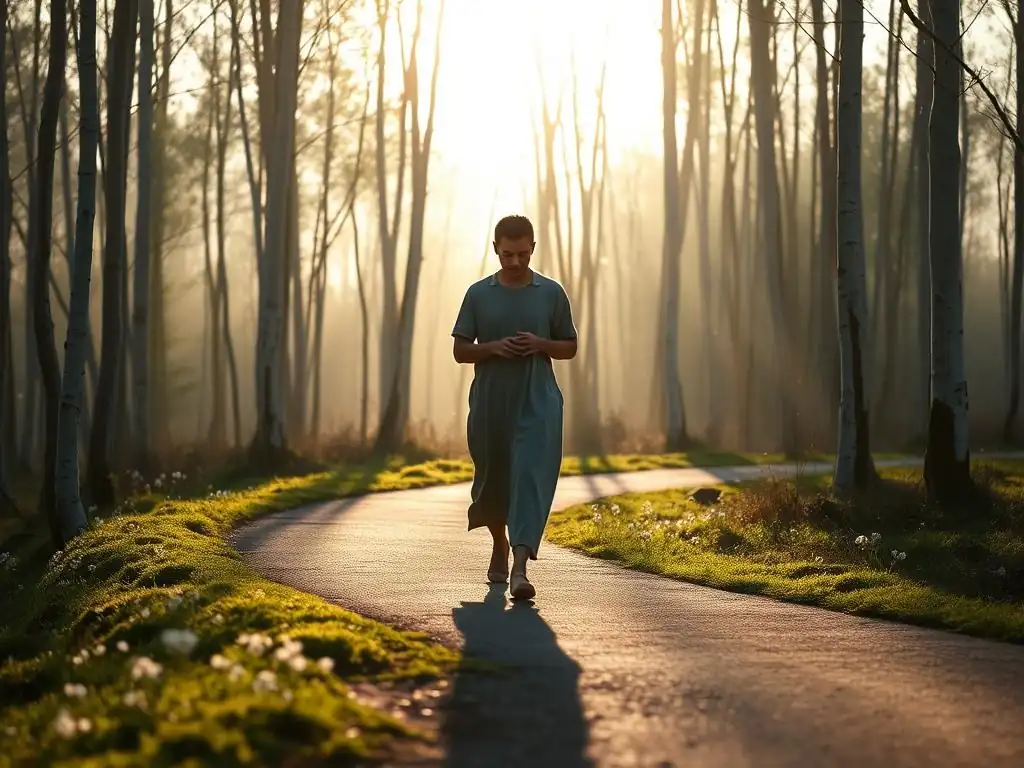
Practicing Walking Meditation During Work Breaks
Work breaks offer an excellent opportunity to integrate short sessions of walking meditation into your day, even if it's just for 5-10 minutes. Instead of scrolling through your phone or chatting by the coffee machine, take a mindful walk around your office building, a nearby park, or even just a quiet hallway. This brief practice can serve as a powerful reset button, helping to clear your head, reduce stress accumulated during work, and refresh your focus.
Use the techniques you've learned: focus on the sensations of your feet, coordinate with your breath, and gently redirect your attention when it wanders to work-related thoughts. A mindful walk during a break can help you transition between tasks, improve your concentration for the rest of the workday, and provide a much-needed mental pause. This is a practical application of walking meditation for beginners in a real-world setting.
Enhancing Mindfulness Through Nature Walks
Walking meditation in nature can be particularly grounding and enriching. The natural environment provides a wealth of sensory experiences to anchor your awareness – the sights of trees and sky, the sounds of wind and water, the smells of earth and plants, the feeling of uneven ground underfoot. A park, a forest trail, a beach, or even a quiet tree-lined street can become your meditation space.
As you walk, open your senses to the natural world around you. Notice the intricate details of a leaf, the texture of bark, the pattern of clouds. Be aware of the changing light or temperature. Allow the sounds of nature to be part of your field of awareness without getting lost in identifying them. Walking meditation in nature can foster a sense of connection to the larger world and provide a deep sense of peace and perspective. This type of mindful walking is often a favorite for many practitioners.
Creating a Dedicated Space for Home Practice
While walking meditation can be done almost anywhere, having a dedicated space at home can make it easier to establish a consistent practice. This doesn't require a large area. A clear hallway, a quiet room where you can walk in a circle, or even a loop around your living room can suffice. The key is to make the space inviting and free from clutter or major distractions.
If you have limited space, you might walk a short path back and forth, pausing mindfully at each end before turning. Some people find it helpful to define the boundaries of their walking path clearly. Having a specific area designated for this practice removes the barrier of having to find a suitable location each time you want to practice, making it more likely that you will actually do it. A dedicated home space is especially helpful for establishing a routine of walking meditation for beginners.
Advanced Techniques for Deepening Your Practice
Exploring Different Walking Meditation Styles [Example: Labyrinth Walking]
As you become more comfortable with basic walking meditation, you might explore different styles to deepen your practice. One historical and symbolic method is labyrinth walking. A labyrinth is not a maze (where you get lost) but a single, winding path that leads to a center and then back out. Walking a labyrinth is inherently a meditative process; the path guides you, freeing your mind to focus inward.
Walking a labyrinth typically involves three stages: purgation (releasing thoughts and worries as you walk toward the center), illumination (receiving insights or clarity in the center), and union (integrating your insights as you walk back out into the world). The physical act of following the winding path provides a strong anchor for the mind, making it a powerful form of walking meditation that can lead to deep reflection and insight.
Incorporating Mantras or Affirmations
Adding a mantra or affirmation can provide an additional layer of focus and intention to your walking meditation. A mantra is typically a word or phrase, often in Sanskrit, that is repeated silently or softly. An affirmation is a positive statement related to your intention. For example, you might silently repeat "peace" with each step, or "I am present" as you inhale and "I am calm" as you exhale.
Using a mantra or affirmation can help quiet the mental chatter and reinforce a desired state of mind. It provides a consistent anchor that can be particularly helpful on days when the mind is very busy. Choose a mantra or affirmation that resonates with you and your current intention. Repeat it gently, allowing the words or sounds to dissolve into the rhythm of your walk. This technique can add a devotional or intentional dimension to your walking meditation practice.
Combining Walking Meditation with Body Scan Meditation
For a deeper exploration of physical sensation, you can combine walking meditation with elements of a body scan meditation. While walking, bring your awareness sequentially to different parts of your body, noticing the sensations there as you move. You might start with your feet, then move your awareness up through your ankles, calves, knees, thighs, hips, torso, arms, and shoulders, all while continuing to walk mindfully.
This practice enhances interoceptive awareness – the ability to perceive internal bodily sensations. It can reveal areas of tension you weren't previously aware of and helps integrate the experience of your entire body moving through space, rather than just focusing on the feet. Combining these two techniques offers a comprehensive approach to embodied mindfulness, allowing you to explore both movement and stillness within the body simultaneously during your walking meditation.
The Evolving Landscape of Walking Meditation
The Use of Technology to Support Practice [Example: Wearable Sensors]
While walking meditation is traditionally a low-tech practice, technology is beginning to offer tools to support and enhance it. Mindfulness and meditation apps often include guided walking meditations. Some wearable sensors and devices designed for health tracking are exploring ways to measure aspects of mindful movement, such as pace consistency, gait symmetry, and even physiological indicators like heart rate variability during a mindful walk.
While technology should not replace the core practice of internal awareness, these tools can sometimes offer helpful feedback or guidance, particularly for those new to walking meditation for beginners. For instance, an app might provide timed intervals or gentle prompts to return to awareness. Future developments might see technology offering more sophisticated feedback on your state of presence based on subtle physical cues, though the essence of the practice remains rooted in your own subjective experience.
The Increasing Recognition of Walking Meditation for Well-being
Walking meditation is gaining increasing recognition in the fields of mental health and well-being. As research into the benefits of mindfulness expands, the specific advantages of incorporating movement are becoming clearer. Health professionals, therapists, and wellness coaches are more frequently recommending walking meditation as a practical and accessible tool for managing stress, anxiety, and even symptoms of depression.
Its accessibility – requiring no special equipment or location – makes it a highly adaptable practice for diverse populations and settings, from corporate wellness programs to therapeutic interventions. The growing body of evidence supporting its positive impact on both mental and physical health is contributing to its integration into mainstream wellness recommendations, solidifying its place as a valuable component of a comprehensive approach to well-being.
Resources for Continued Learning and Exploration
For those interested in deepening their walking meditation practice beyond the beginner stage, numerous resources are available. Many mindfulness centers and meditation groups offer guided walking meditation sessions or retreats. Books by prominent mindfulness teachers often include detailed instructions and insights on the practice. Online platforms and meditation apps provide a wealth of guided practices and theoretical explanations.
Exploring different traditions and teachers can also provide new perspectives and techniques. Some resources focus specifically on walking meditation, while others integrate it as part of a broader mindfulness or meditation curriculum. Engaging with these resources can help refine your technique, provide support, and inspire you to continue your journey with walking meditation, making it a lifelong practice for cultivating inner peace and presence.
Frequently Asked Questions
### What exactly is walking meditation, and how does it differ from seated meditation?
Walking meditation is a form of mindfulness practice where you focus on the sensations of walking, rather than sitting still. It differs by using movement as the anchor to the present moment, rather than breath or a mantra.
### Is walking meditation suitable for beginners, or does it require prior meditation experience?
Walking meditation is highly suitable for beginners! It can be easier than seated meditation for some, as the movement can help quiet the mind and reduce restlessness.
### What are the key benefits of incorporating walking meditation into my routine?
The key benefits include reduced stress and anxiety, improved focus and concentration, and a greater sense of connection with your body and surroundings. It also offers a gentle form of exercise.
### How long should a walking meditation session typically last for a beginner, and where should I practice?
Beginners can start with just 5-10 minutes of walking meditation. Practice anywhere that feels safe and relatively quiet, such as a park, garden, or even indoors.
### What are some common mistakes to avoid when practicing walking meditation as a beginner?
Avoid overthinking your steps or trying to "get it right." Focus on simply noticing the sensations and gently redirecting your attention when your mind wanders. Don't judge yourself!
Final Reflection: The Path to Presence Begins with a Single Step
The ancient practice of walking meditation, once confined to monasteries, is now more relevant than ever in our fast-paced, technology-driven world. The ability to find stillness and presence amidst the chaos of daily life is not a luxury, but a necessity for our mental and emotional well-being. This guide has provided a foundational understanding of how to cultivate mindfulness through the simple act of walking, offering a practical and accessible path to inner peace.
The profound impact of even short periods of mindful walking on my own life has been undeniable. The ability to quiet the incessant mental chatter and connect with the present moment has significantly reduced my stress levels and improved my overall sense of calm. The journey of a thousand miles begins with a single step.
- Lao Tzu. This quote perfectly encapsulates the essence of walking meditation; the transformative power lies not in grand gestures, but in the consistent, mindful practice of each step.
Now, it's your turn. Consider incorporating even five minutes of mindful walking into your daily routine. Notice the sensations in your feet, the rhythm of your breath, and the world unfolding around you. Don't strive for perfection; simply allow yourself to be present. Let this practice become your personal sanctuary, a moment of peace amidst the storm, a stepping stone towards a more mindful and fulfilling life. Begin your journey today.
Unleash Your Inner Calm: Start Walking Meditating Today!
Thanks for taking the time to explore the world of walking meditation with us! We hope you gained valuable insights into finding peace and presence, even amidst a busy life. Ready to integrate this practice into your day?
- Begin your first walking meditation now: Find a quiet space, even just for five minutes, and try the techniques we outlined. Notice the sensations in your feet, the rhythm of your breath, and the world around you.
- Share your experience: Tell us about your first walking meditation! What surprised you? What did you find most challenging or rewarding? We love hearing your stories.
- Explore mindful movement further: Consider incorporating other mindful movement practices like yoga or Tai Chi to deepen your connection to your body and mind.
What small step will you take today to cultivate more mindfulness in your daily walks?