The Enlightenment and Mental Health: A Radical Shift in Understanding
Welcome to our deep dive into one of the most transformative eras in the history of mental health. The Enlightenment (roughly 1685–1815) didn’t just change politics and science—it fundamentally reshaped how society viewed madness, reason, and human suffering. For anyone exploring the roots of modern psychiatry, this subcategory reveals how philosophers, physicians, and reformers began replacing supernatural explanations with humane, observational, and moral approaches. Here, you’ll discover the birth of the asylum, the rise of “moral treatment,” and the early steps toward viewing mental illness as a medical condition rather than a spiritual curse.
🧠 From Demons to Diseases: The Medicalization of Madness
During the Enlightenment, thinkers like John Locke and Thomas Sydenham argued that the mind could be understood through natural laws, just like the body. This shifted mental illness from religious punishment or demonic possession to a treatable condition of the nervous system. Physicians began publishing detailed case studies, linking symptoms to brain function, and advocating for clinical observation over superstition. This era planted the seed for today’s biological psychiatry, making it a pivotal moment for anyone researching how we classify and treat mental disorders.
You’ll learn how the concept of “nerves” became a cultural buzzword, with conditions like “melancholy” and “hysteria” reinterpreted as physical imbalances. Key figures such as William Cullen and Philippe Pinel pushed for classification systems, separating mania, melancholia, and dementia into distinct categories. This medicalization also democratized care—ordinary people, not just clergy, could now seek help from physicians. However, treatments still included purges, cold baths, and bloodletting, reminding us that progress was gradual and sometimes harsh.
🏥 The Birth of the Asylum and Moral Treatment
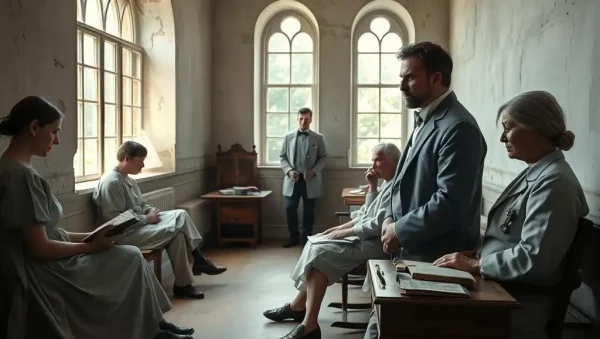
One of the most lasting legacies of the Enlightenment is the creation of specialized institutions for the insane. Previously, people with mental illness were jailed, chained, or left to wander. Reformers like William Tuke (in England) and Vincenzo Chiarugi (in Italy) pioneered “moral treatment”—a philosophy that emphasized kindness, meaningful work, and respectful conversation over restraint. The York Retreat, founded in 1796, became a model where patients lived in homelike settings, ate well, and were treated as rational beings capable of recovery.
In this section, you’ll explore how these asylums reflected broader Enlightenment ideals of human dignity and progress. The shift was not just architectural but philosophical: caregivers believed that a structured routine and emotional support could restore reason. While moral treatment often produced better outcomes than chains, it also had limitations—it assumed patients were inherently and morally educable. Yet, its influence persists today in modern psychiatric rehabilitation, occupational therapy, and patient-centered care. For historians, these institutions mark the first systematic attempt to heal, rather than merely contain, the mentally ill.
📚 Philosophers on the Mind: Reason, Passion, and Alienation
The Enlightenment’s greatest minds—from Descartes to Kant—debated the nature of consciousness and mental breakdown. Locke’s Essay Concerning Human Understanding proposed that the mind begins as a blank slate, implying that madness could arise from faulty associations or corrupted experience. Later, French philosopher Étienne Bonnot de Condillac expanded on this, suggesting sensory deprivation could cause mental disorders. These theories moved the locus of illness from the soul to perception and memory, paving the way for psychological models.
You’ll also encounter the term “alienation” coined by Philippe Pinel to describe the mentally ill as people alienated from their own reason, not from God. This reframing encouraged empathy—if madness was a failure of association, then re-education and dialogue could potentially cure it. However, not all were optimistic; David Hume famously argued that reason alone could not govern passions, foreshadowing modern debates about irrationality and emotional regulation. This philosophical background is essential for understanding why the 18th century is considered the cradle of contemporary clinical psychology.
🕊️ The Dark Side of Progress: Chains, Coercion, and Social Control
While the Enlightenment is celebrated for humanitarian advances, it also contained contradictions. Asylums often doubled as tools for social control—locking away poor women, political dissidents, and family burdens labeled as “mad.” Michel Foucault’s later critique shows that the “great confinement” of the 17th and 18th centuries often swept vagrants and criminals alongside the truly mentally ill. Even in reform institutions, moral treatment could be paternalistic, imposing middle-class values of obedience and productivity.
This nuance matters for modern readers. You’ll learn how the rhetoric of reason sometimes justified forced labor and isolation, and how diagnoses could be weaponized. For example, “moral insanity” was applied almost exclusively to women who defied gender norms. This section challenges the naive narrative of progress, encouraging a critical view of how power shapes mental health definitions. It’s a reminder that even revolutionary ideas can carry unintended harms—a lesson still relevant in today’s diagnostic debates.
🌍 The Global Reach: Enlightenment Ideals Beyond Europe
Though centered in Europe, Enlightenment mental health reforms spread through colonial networks and transatlantic exchanges. In America, Benjamin Rush—the “father of American psychiatry”—adapted moral treatment to the new Republic, though he still used harsh physical methods. In the Ottoman Empire, hospitals in Istanbul had long separated psychiatric patients without chains, offering a contrast to Western delays. Similarly, in China, the 18th century saw persistent traditional medicine views of madness as an imbalance of yin and yang, coexisting with emerging Western ideas.
This global perspective helps you appreciate both diversity and commonality in mental health paradigms. You’ll examine how missionaries, physicians, and travelers carried Enlightenment texts to distant lands, sometimes imposing European models on indigenous healing practices. Yet, local responses were not passive—many cultures integrated new ideas selectively. For SEO, this section targets keywords like “global history of psychiatry,” “cross-cultural mental health,” and “colonial medicine,” providing a richer, more complete picture for researchers and curious minds alike. Understanding this spread prevents Eurocentric bias in your mental health education.
🔍 From Enlightenment to Modern Psychiatry: Lasting Legacies
The Enlightenment’s paradigm shift directly shaped 19th-century psychiatric theory and practice. Emil Kraepelin and Sigmund Freud drew upon earlier ideas of systematic observation and the power of introspection. The apothecary jars of moral treatment evolved into the psychopharmacology and talk therapies of today. But more importantly, the era established that mental illness is neither shameful nor incurable—it is a human problem requiring reason, compassion, and science. This foundational belief underpins modern anti-stigma campaigns and recovery models.
You’ll trace how key concepts—like “therapeutic alliance” and “person-centered care”—have roots in Enlightenment physician-patient relationships. Also, the era’s classification attempts anticipate DSM and ICD systems. However, you’ll also see unresolved tensions: does mental health require societal reform or individual resilience? The Enlightenment leaned toward societal structure, whereas later centuries shifted toward individual pathology. This legacy is vital for anyone studying mental health policy, advocacy, or clinical ethics, offering both hope and cautionary tales.
Frequently Asked Questions
What is the main difference between pre-Enlightenment and Enlightenment views of mental illness?
Before the Enlightenment, mental illness was typically seen as divine punishment, demonic possession, or a moral failing, often managed by clergy or through exorcism. The Enlightenment replaced these with naturalistic explanations, framing madness as a disease of the nervous system or mind, treatable by physicians through observation and humane care. This shift from supernatural to medical was radical and laid the groundwork for modern psychiatry.
Who was Philippe Pinel and why is he important?
Philippe Pinel was a French physician, often called the father of modern psychiatry. He famously advocated for removing chains from asylum patients and introduced “moral treatment”—a method combining compassionate care, routine, and social engagement. He also developed a classification system for mental disorders. His 1801 book, Traité médico-philosophique sur l'aliénation mentale, served as a blueprint for humane institutional care worldwide.
How did moral treatment actually work in practice?
Moral treatment emphasized talking with patients, providing structured daily activities, nutritious meals, fresh air, and respectful emotional support. It avoided restraint and punishment, instead using gentle persuasion and rewards. Patients often worked in gardens or crafts, which provided purpose. While not always effective for severe cases, its success rates were comparable to today’s early interventions, and it profoundly influenced modern psychosocial rehabilitation.
Did the Enlightenment improve the lives of most mentally ill people?
Yes, for some—but not all. The establishment of asylums and moral treatment offered better living conditions than prisons or streets. However, many asylums became overcrowded and later regressed into “warehouses.” Also, many people never received care, especially minorities and the poor. Still, the era permanently changed societal attitudes, making mental illness a fit subject for science and compassion, which benefits millions today.
What remains from the Enlightenment in today’s mental health care?
Many principles survive: patient-centered care, therapeutic rapport, classification systems (DSM/ICD), rehabilitation through structured activity, and the belief that mental illness is treatable. The humanitarian ethos of dignity and recovery is central to modern advocacy. However, we now have better diagnostics and less paternalism, thanks to critiques of Enlightenment-era power. So, while specific treatments changed, its philosophical core remains foundational.